
Fluvsies Merge Party
TutoTOONSEducational
3.978.00 Reviews
- Version
- 2.4.25
- Installs
- 1.00M
- Age Rating
- Everyone
Screenshots
Our Review of Fluvsies Merge Party
 Analysis by Appyee
I spent time with Fluvsies Merge Party as a light educational game built around collecting, combining, and caring for cute virtual creatures. It comes from TutoTOONS and is aimed at Everyone, so the presentation is clearly designed to be approachable for younger players while still giving parents something simple to understand. My first impression was that it works best as a short, cheerful activity rather than a deep strategy game: you open it, complete a few playful tasks, make progress with the creatures, and leave without needing to remember a complicated system.
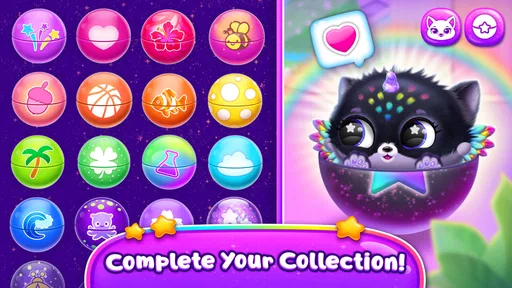
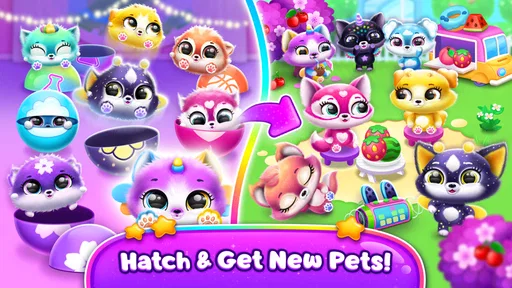
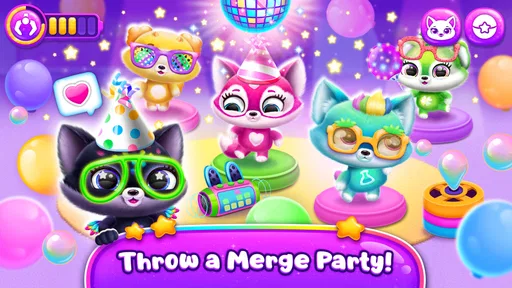
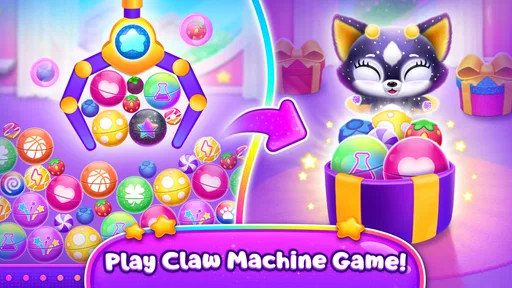
The central appeal is the combination of a claw-machine-style activity with egg collecting and pet hatching. That gives the game a satisfying rhythm: try to obtain an egg or item, discover what comes out, then use the result to expand the collection. The merge-party idea adds another layer because collecting is not only about finding something new; it also encourages you to think about how duplicate or related creatures can contribute to progress. I found that loop easy to understand within a few minutes, which is important for a game aimed at children and casual family play.
How the current game feels to play
I focus here on the game’s moment-to-moment rhythm: how the claw-machine activity, eggs, and collection goals make a short visit feel rewarding, and where that rhythm can start to feel repetitive. From there, it helps to consider which device and household settings can make play more comfortable and predictable.
A friendly starting point for younger players
The strongest part of the experience is its immediate accessibility. There is no need to learn a long list of controls or understand a complicated story before the main activity begins. The visual focus is on fluffy pets, eggs, and playful interactions, so the purpose of each session is easy to grasp. A child can enjoy the surprise of hatching and collecting, while an adult can quickly see what the player is doing without having to explain a dense ruleset.
I would describe the learning element as informal rather than academic. It encourages recognition, sorting, patience, and simple decision-making through the collection process. Players learn to notice what they have, decide what to combine or pursue, and accept that some rewards require repeated attempts. That makes it suitable for relaxed play after school or during a short break, but it should not be mistaken for a structured lesson app with reading, mathematics, or curriculum-based exercises.
The game is free to start, which lowers the barrier for families who want to test it before committing to anything. It supports devices running Android 6.0 or later, making the compatibility requirement relatively modest. Its current version is 2.4.25, so anyone installing it today should use that version as the reference point rather than assuming that an older experience will look exactly the same.
The collection loop is more important than the party theme
Although the name suggests a lively social celebration, the part that kept my attention was the collection loop. The claw-machine activity gives each attempt a small moment of anticipation, and the egg system turns that moment into longer-term progress. Hatching a pet is more memorable than simply receiving a generic score because the result becomes part of a visible personal collection.
That structure also creates a useful choice for parents. If a child tends to lose interest quickly, the game offers short objectives that can be completed in a brief session. If the child enjoys organizing and collecting, the same system can provide a reason to return. I recommend setting a stopping point before opening the game, though. Collection games can make “one more try” feel natural, especially when the next egg or creature seems close.
A practical routine is to let the player begin by checking the collection, then choose one small target for the session. That target might be working toward a new pet, using available items sensibly, or simply completing a few activities without spending anything. This turns the game from an endless sequence of taps into a manageable exercise in planning and restraint.
What the latest version means for a new player
The presence of a current version number is useful because it tells new players they are reviewing an actively identifiable build rather than an unnamed package. The game was released on July 1, 2024, and the version available for this review is 2.4.25. I would not treat those details as proof that every part of the game has changed recently, but they do give the experience a clear point in its development.
For someone installing it for the first time, the main advantage is consistency: use the current build, spend a little time learning the loop, and judge whether the pace suits the child who will actually play it. Existing users should expect the broad identity to remain centered on cute pets, eggs, collecting, and merging rather than suddenly becoming a different kind of game. The version information is therefore more useful as a reference for troubleshooting or comparing experiences across devices than as a promise of a particular new feature.
How it fits into everyday family use
One realistic use case is a child waiting at a restaurant while an adult finishes a conversation. A short session can provide something more focused than passive video, and the collecting structure gives the child a clear activity to return to. I would still keep the session supervised for younger children, not because the controls are difficult, but because the excitement of collecting can lead to requests for purchases or repeated attempts.
Another good situation is shared play between a parent and child. The adult can ask the child which pet to work toward, why a particular item should be saved, or what happened after an egg was opened. Those questions turn the game’s simple systems into opportunities to practice planning and describing choices. The app does not need to carry the entire educational value by itself; it works better as a prompt for conversation.
It is less suitable when a child needs a quiet, completely open-ended creative tool. The game’s motivation comes from rewards and collection progress, so a child who prefers drawing, building without goals, or inventing stories may find the repeated reward cycle limiting. Likewise, older players looking for serious strategy, competitive depth, or a substantial narrative will probably outgrow it quickly.
Free entry does not mean a completely cost-free experience
The game is listed as free, but it includes in-app purchases ranging from $1.49 to $159.99 per item. That is the most important practical detail for parents to understand before handing over a device. Even when a child can play without buying anything, the presence of optional purchases can change how the collection loop feels, particularly if progress becomes associated with obtaining more attempts or items.
My advice is to treat the free version as a trial of the core loop, not as a guarantee that every possible collection goal will feel equally accessible without spending. Use the device’s purchase controls, agree on a clear rule before play, and explain that waiting or playing within the available resources is part of the game. This is also a useful lesson in delayed gratification: the child can choose whether a goal is worth patience instead of assuming that every obstacle should be removed immediately.
The wide purchase range makes the game a poor choice for unsupervised use on a shared payment account. That does not make the game unsuitable for families, but it does mean the adult should handle the setup. I would also avoid presenting purchases as rewards for ordinary behavior, since that can make the game’s collection system more emotionally important than it needs to be.
Where it stands beside similar children’s games
Compared with a traditional educational game focused on letters, numbers, or puzzles, this title is more playful and less instructional. Its educational value comes from the habits built around collecting and choosing rather than from explicit lessons. If your priority is school practice, a dedicated learning app will be a better match. If your priority is a gentle game that can encourage observation and simple planning, this one has a clearer advantage.
Compared with open-ended virtual pet games, the egg and claw-machine structure gives it a more defined reason to play. The player is not only caring for a pet or decorating a space; there is a repeated search for new creatures and a merging-oriented sense of progress. The trade-off is that the experience may feel more repetitive than a game with a larger world or more varied activities.
It also differs from competitive collection games because the appeal is primarily personal discovery. A child can focus on building a collection without needing to compare skill against other players. That is a positive for relaxed family use, although anyone wanting leaderboards, complex battles, or a strong multiplayer identity should choose another category of game.
Small strategies that make the loop better
My first useful tip is to look at the collection before spending resources. It is tempting to act immediately when an egg or reward appears, but a quick check of what is already available can prevent careless choices. The collection is not just a gallery; it can help the player decide whether to pursue variety or work toward a particular merge.
Second, use short sessions to protect the game’s sense of novelty. The surprise of hatching is strongest when it is not buried under a long, repetitive play period. A child who plays for a limited time may return with more interest, while extended sessions can turn the same loop into routine tapping.
Third, make “free progress first” an explicit household rule. Let the player use what the game provides naturally before anyone considers an in-app purchase. This gives the family a clearer idea of whether the core mechanics are enjoyable on their own, and it separates genuine interest in the game from excitement caused by instantly unlocking something.
A fourth tip is to use the merge process as a conversation about choices rather than efficiency. Ask what the child hopes to discover and whether combining items now might affect that goal. Even if the underlying system is simple, this approach gives the player ownership over decisions instead of turning the game into a sequence of instructions from an adult.
What existing players may notice over time
Players who have already built a collection will probably judge the game differently from newcomers. At the beginning, almost every egg or pet feels like progress. Later, the excitement depends more on the value of the next discovery and on whether repeated activities still feel rewarding. This is a normal pressure point for collection games, and it is where the title may start to feel less substantial than a larger adventure or simulation.
The current build gives the game a stable reference for returning users, but I would avoid expecting version changes alone to solve the natural repetition of the core loop. Updates can refine an experience, yet the basic question remains whether hatching, collecting, and merging are still enjoyable after the first wave of discovery. Families should judge that by watching how the child plays: enthusiastic planning is a good sign, while constant requests to skip ordinary progress may indicate that the loop has become frustrating.
There is also a difference between collecting for discovery and collecting for completion. The first can remain satisfying even when progress is slow; the second can create pressure if the player feels that an incomplete set is a problem. I recommend encouraging the former attitude. The game is healthier as a small source of curiosity than as a checklist that must be finished at any cost.
Who should choose it, and who should pass
I would recommend it to younger players who enjoy cute animals, surprise rewards, and simple repeatable activities. It is especially suitable for families looking for a free starting point that can be played in short bursts and discussed together. The Everyone rating matches its approachable presentation, although the purchase system still makes adult supervision sensible.
I would be more cautious about recommending it to children who become upset when they cannot unlock something immediately. The combination of collecting and optional purchases can be uncomfortable for players who treat every missing pet as a failure. In that case, a puzzle game with fixed levels or a creative app with fewer reward pressures may be a better fit.
It is also not my first choice for an older child seeking complexity. The game’s charm is in its clarity and softness, not in demanding strategy. Someone looking for a long story, advanced problem-solving, or a competitive challenge will likely get more from a different game, even if they initially enjoy the cute presentation here.
What I would watch as the game continues
For future development, I would pay attention to whether the game keeps its collection loop fresh without making purchases feel necessary. New discoveries can help returning players, but variety matters more than simply adding more objects if the basic activity remains unchanged. I would also watch how well the game balances quick rewards with patience, since that balance affects both its educational value and its suitability for younger players.
Another important point is how the current version serves existing users. New players can be satisfied by the first discoveries, while longtime players need meaningful reasons to return. The best evolution would preserve the easy entry point while giving established collections more purpose, without turning the experience into a demanding chore.
Finally, I would look for continued clarity around progression and purchases. A child should understand what can be achieved through ordinary play, and a parent should be able to set boundaries without confusion. Those details matter more here than flashy additions because they determine whether the game remains a pleasant family activity or becomes a source of repeated negotiation.
My final take
Fluvsies Merge Party is a charming, accessible educational game whose real strength is its gentle collection rhythm. Eggs, fluffy pets, and merging give young players an easy-to-follow reason to keep exploring, while parents can turn the choices into small conversations about patience, planning, and priorities. The game’s free entry and Everyone rating make it easy to try, and its scale suits brief everyday sessions.
My enthusiasm is tempered by the predictable limits of the format. The loop can become repetitive, the educational side is informal rather than lesson-based, and the in-app purchase range means adults should prepare the device and set expectations first. I would not choose it for advanced strategy or open-ended creativity, but I would consider it a good candidate for a supervised, low-pressure play session with a younger child.
With over one million installs and an average rating of 3.9 from around 3.8 thousand ratings, it has clearly reached a sizeable audience, though those figures should be read as context rather than a guarantee that every family will enjoy it. My recommendation is simple: try the free experience, establish a no-surprise-purchases rule, and see whether the child enjoys the discovery itself rather than only the next reward. If that curiosity lasts, this small pet-collecting game can earn a regular place in a family’s short-play rotation.
Verdict
Strengths of Fluvsies Merge Party
- Cute animal characters appeal to younger players.
- Merge mechanics are simple to learn and easy to pick up.
- Short activities make it suitable for quick play sessions.
- Bright visuals and cheerful sounds create a friendly atmosphere.
- Progression encourages players to keep discovering new Fluvsies.
Limitations of Fluvsies Merge Party
- Some content may feel repetitive after extended play.
- Many features are designed primarily for younger children.
- In-app purchases can be tempting for impatient players.
- The game may require considerable storage on older devices.
- Limited challenge may disappoint players seeking complex gameplay.
Other Releases by TutoTOONS
View All
Fluvsies - A Fluff to Luv
Educational4.1

Sweet Baby Girl Cleanup 5
Educational3.8

Smolsies - My Cute Pet House
Educational4.1

Bunnsies - Happy Pet World
Educational4.0
Similar Picks in This Category
View All
Little Panda Policeman
BabyBus4.0

Monster Trucks Game for Kids 2
Raz Games4.1

Little Panda's Chinese Recipes
BabyBus4.4

Little Panda's Restaurant
BabyBus4.4

Little Panda's Ice Cream Games
BabyBus4.3

Baby Panda Care
BabyBus3.8
Frequently Asked Questions
What is Fluvsies Merge Party?
Fluvsies Merge Party is a casual mobile game centered on adorable virtual creatures, merging mechanics, and party-themed activities. Players combine items or characters to unlock new content, decorate spaces, and interact with colorful Fluvsies. The experience is designed to be easy to understand and family-friendly, making it suitable for short play sessions as well as longer periods of casual entertainment.
How do you play Fluvsies Merge Party?
The main gameplay involves completing simple objectives, collecting resources, and merging matching objects to create upgraded items or unlock new possibilities. As you progress, you can take part in party activities and discover additional content. Controls are generally tap-based, so the game is accessible even for younger players or anyone who prefers relaxed gameplay rather than complex controls, combat, or demanding strategy.
Is Fluvsies Merge Party free to download and play?
Fluvsies Merge Party can generally be downloaded for free on supported mobile devices, although the game may include optional in-app purchases. These purchases can provide extra resources, cosmetic content, or progression-related advantages. You can usually play without spending money, but some features, rewards, or waiting periods may encourage purchases. It is advisable to review the store listing and parental settings before downloading.
Does Fluvsies Merge Party require an internet connection?
Some parts of Fluvsies Merge Party may work without a constant internet connection, especially basic activities that have already been loaded on the device. However, an internet connection may be required for advertisements, purchases, updates, cloud-related functions, or certain events and online features. Availability can vary depending on the device and game version, so offline play should not be considered guaranteed for every feature.
Is Fluvsies Merge Party suitable for children?
Fluvsies Merge Party is presented as a colorful, approachable game aimed largely at children and families, with cute characters and simple interactions instead of complicated gameplay. Nevertheless, parents should check the age rating, advertising practices, and in-app purchase options for their region. If children use the game independently, enabling parental controls and restricting unauthorized purchases can help create a safer and more controlled experience.
Play our best games!


